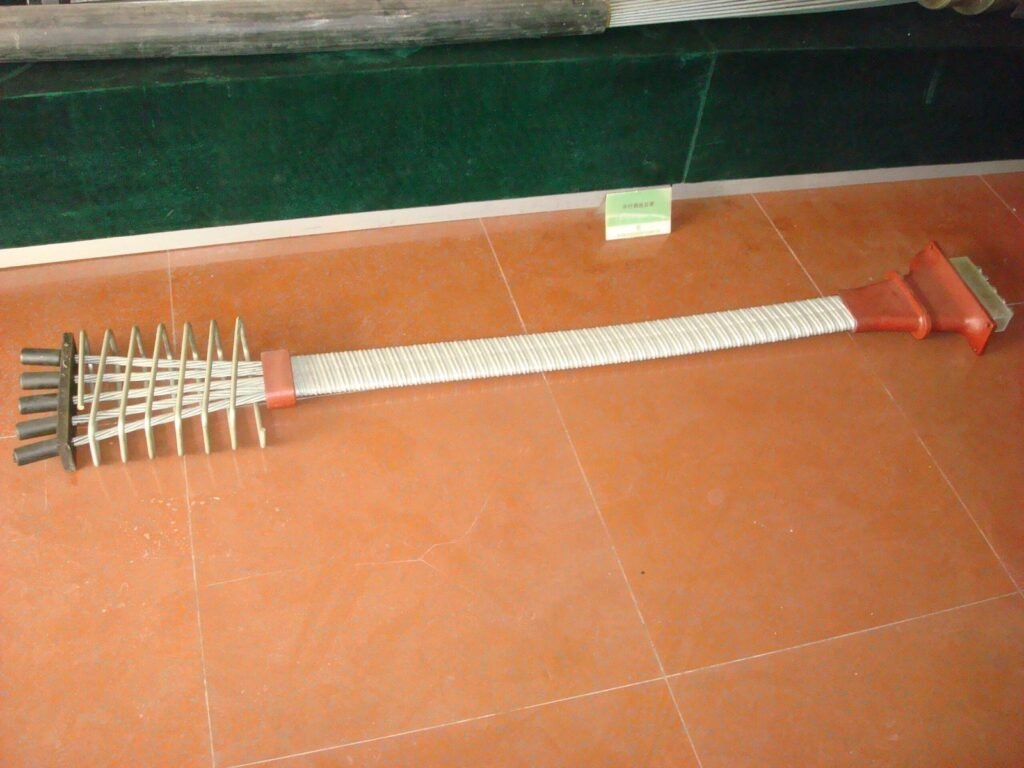
Anchorage
The foundation of every tensioned structure — KIDL’s Anchorage Systems lock prestressing force precisely in place, ensuring structural integrity, safety, and longevity in bridges, buildings, and post-tensioned slabs.
Product Type
Dead End / Live End / Coupler
Strand Capacity
1 – 55 Strands
Material
High-strength Cast Steel
Tensile Strength
1860 MPa System
Standard
BS / ASTM / PTI / BNBC
Overview
KIDL supplies a complete range of anchorage products — including live end anchors, dead end anchors, flat anchors, and couplers — engineered for maximum load transfer efficiency with zero slippage. Each unit is precision-machined from high-strength cast steel and rigorously tested to ensure consistent performance under sustained and dynamic loading.
Whether used in post-tensioned slabs, prestressed beams, cable-stayed bridges, or ground anchors, KIDL’s Anchorage Systems deliver the precision and reliability that world-class construction demands.
Specifications
| Parameter | Detail |
|---|---|
| Anchorage Types | Live End, Dead End, Flat, Coupler, Ground Anchor |
| Strand Capacity | 1 to 55 strands per unit |
| Compatible Strand | 12.7 mm & 15.2 mm (0.5″ & 0.6″) low-relaxation |
| Tensile Strength | 1860 MPa (270 ksi) system |
| Material | High-strength cast steel / ductile iron |
| Surface Treatment | Galvanized / Epoxy coated / Black oxide |
| Wedge Type | 2-piece or 3-piece precision-machined steel wedges |
| Load Transfer Efficiency | ≥ 95% of GUTS (Guaranteed Ultimate Tensile Strength) |
| Corrosion Protection | Grease-filled HDPE sheathing available |
| Standards | BS 4447, ASTM A416, PTI DC10.5, BNBC |
Applications
- Prestressed Bridges & Girders
- Post-tensioned Building Slabs
- Precast Concrete Elements
- Retaining Walls & Dams
- Ground & Rock Anchors
- Cable-stayed Structures
- Nuclear & Industrial Vessels
- Tunnel Lining & Shafts
Advantages
Zero-Slip Grip Performance — Precision-machined wedges lock every strand with maximum bite force, eliminating slippage under sustained tensile load.
High Load Transfer Efficiency — Achieves ≥95% of GUTS, ensuring that the full prestressing force is delivered safely into the concrete structure.
Superior Corrosion Protection — Available with galvanized finish, epoxy coating, or grease-filled HDPE sheathing for aggressive marine and chemical environments.
Versatile System Range — Live end, dead end, flat, and coupler types cover every post-tensioning and prestressing configuration with one unified system.
Long-term Structural Reliability — Engineered for the full design life of the structure — no relaxation, no creep, no loss of prestress over decades.
Internationally Certified — Fully compliant with BS 4447, ASTM A416, PTI DC10.5, and BNBC — accepted by engineers and approving authorities worldwide.
Installation
1. Duct & Sheathing Placement
Position the corrugated metal duct or HDPE sheath along the designed tendon profile inside the formwork. Secure at regular intervals to prevent displacement during concreting.
2. Anchor Head Installation
Fix the anchor casting plate and trumpet firmly at both live and dead ends. Ensure precise alignment with the tendon axis to avoid eccentric loading during stressing.
3. Strand Threading
Thread the prestressing strands through the duct and anchor head. Confirm correct strand count, seating depth, and protrusion length at the stressing end.
4. Concreting & Curing
Pour concrete and allow it to cure to the minimum required strength (typically 75–80% of design strength) before any stressing operation begins.
5. Stressing & Wedge Seating
Attach the hydraulic jack to the live end anchor. Apply tension incrementally per the stressing programme. Wedges seat automatically as jack pressure is released.
6. Grouting & End Cap Sealing
Inject cementitious grout into the duct to fully encapsulate the strands. Fit the protective end cap over the anchor head and seal with approved non-shrink compound.