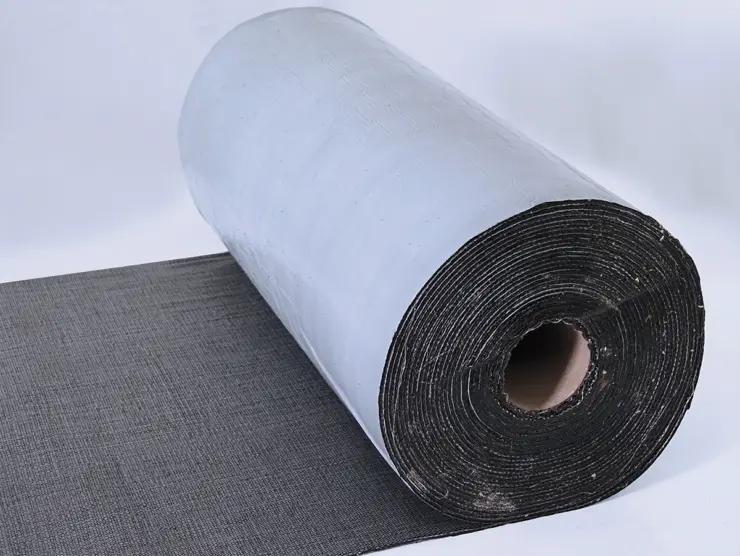
Geo Membrane
When the earth must not leak — KIDL’s Geomembrane Liners create an impenetrable barrier against water, chemicals, and contamination, protecting soil, groundwater, and infrastructure for generations to come.
Product Type
HDPE / LLDPE / PVC / EPDM
Thickness Range
0.5 mm – 3.0 mm
Roll Width
Up to 8 m wide
Tensile Strength
≥ 25 kN/m
Standard
ASTM / GRI GM13 / ISO 13493
Overview
Geomembrane Liners are synthetic impermeable membranes used in geotechnical and environmental engineering to control fluid migration in man-made structures. Acting as a near-zero permeability barrier, they prevent leakage, seepage, and contamination between contained materials and the surrounding soil or groundwater system.
KIDL supplies a comprehensive range of geomembrane types — including HDPE (High-Density Polyethylene), LLDPE (Linear Low-Density Polyethylene), PVC, and EPDM — each selected for its unique combination of chemical resistance, flexibility, UV stability, and puncture strength. Textured surface variants are also available where friction on slopes is critical.
Whether lining a reservoir, capping a landfill, protecting a canal, or sealing a pond, KIDL’s Geomembrane Liners deliver a proven, durable, and environmentally responsible containment solution that meets the demands of Bangladesh’s water management and infrastructure development challenges.
Specifications
| Parameter | Detail |
|---|---|
| Material Types | HDPE, LLDPE, PVC, EPDM, LDPE |
| Thickness Range | 0.5 mm, 0.75 mm, 1.0 mm, 1.5 mm, 2.0 mm, 2.5 mm, 3.0 mm |
| Roll Width | 4 m, 6 m, 7 m, 8 m (project-specific) |
| Tensile Strength | ≥ 25 kN/m (HDPE 1.5 mm, per ASTM D6693) |
| Puncture Resistance | ≥ 320 N (ASTM D4833) |
| Elongation at Break | ≥ 700% (LLDPE) / ≥ 300% (HDPE) |
| Permeability | ≤ 1 × 10⁻¹³ m/s |
| UV Resistance | Carbon black content 2–3% (HDPE); UV stabilised |
| Surface Finish | Smooth / Single-sided textured / Double-sided textured |
| Standards | ASTM D6693, GRI GM13, GRI GM17, ISO 13493, BNBC |
Applications
- Reservoir & Water Storage Lining
- Landfill Caps & Liner Systems
- Canal & Irrigation Lining
- Aquaculture Pond Lining
- Industrial Effluent Lagoons
- Tailings Dam Containment
- Tunnel & Road Waterproofing
- Agricultural Water Conservation
Advantages
Installation
1. Subgrade Preparation
Grade and compact the subgrade to remove sharp stones, roots, and debris that could puncture the membrane. Achieve a smooth, firm surface with no protrusions greater than 12 mm. Install a geotextile cushion layer where subgrade is rocky or irregular.
2. Panel Deployment & Layout
Unroll geomembrane panels in the direction of the slope, avoiding wrinkles and folds. Allow adequate slack for thermal expansion and contraction — typically 1–2% of panel length. Never drag panels over rough surfaces.
3. Panel Overlap & Seam Alignment
Overlap adjacent panels by a minimum of 150 mm (300 mm at anchor trenches). Align seams parallel to the slope direction. Mark seam lines clearly and clean both surfaces of dust, moisture, and contamination before welding.
4. Thermal Welding
Join panels using a double-track hot wedge welding machine (preferred) or hot air extrusion welder for repairs and corners. Maintain correct welding temperature, speed, and pressure per manufacturer specification. An air channel between double-track welds allows pressure testing of each seam.
5. Seam Testing & Inspection
Test all field seams by air pressure test (double-track welds) or vacuum box test (single welds). Verify seam strength with destructive peel and shear samples at specified intervals. Document all test results in the QA/QC log before covering.
6. Anchor Trench & Cover Layer
Terminate the membrane perimeter in a compacted anchor trench (minimum 500 mm deep × 300 mm wide). Backfill the trench with selected fill and compact firmly. Place the specified protective cover layer — sand, gravel, or geotextile — immediately after inspection to prevent UV exposure and physical damage.