PMB & Bitumen
Built to Last. Engineered to Endure.
Bangladesh’s infrastructure is being written in asphalt. One material decision today determines whether a road lasts 8 years — or 25+. Make sure it’s written right.
Product Type
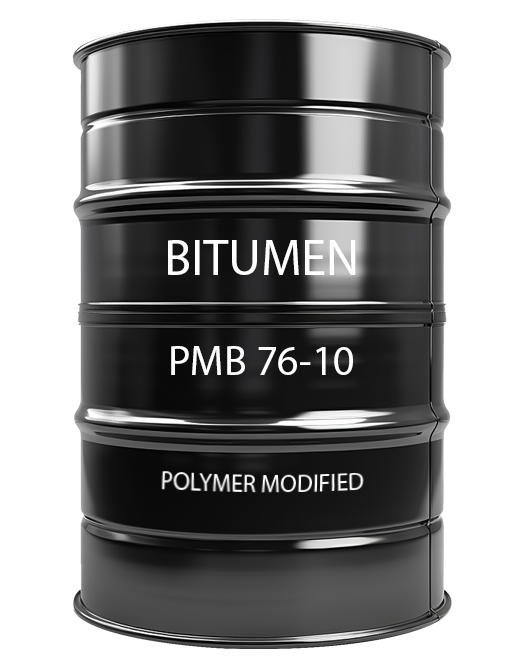
Polymer Modified Bitumen
Modifier
SBS / SBR Polymer
Origin
Oman (Refinery Grade)
Market Share
8–15% of BD Bitumen
Standard
AASHTO / BS 3690 / EN 14023
Overview
Polymer Modified Bitumen (PMB) is an advanced bituminous binder in which conventional bitumen is blended with high-performance polymers — primarily Styrene-Butadiene-Styrene (SBS) — to dramatically enhance its mechanical and thermal properties. The result is a pavement binder that resists rutting at extreme heat, resists fatigue cracking under heavy loads, and resists water damage through the long monsoon season — all simultaneously.
KIDL sources its PMB exclusively from Oman’s precision refineries, where tight SBS modification control and batch consistency produce a product specifically formulated for tropical climate conditions like Bangladesh’s — high heat, high humidity, and heavy axle loading combined. Every consignment comes with full certification, lab reports, and storage stability data.
Padma Bridge Connecting Roads
The most scrutinised project in the nation’s history. Zero margin for failure — specified KIDL PMB.
Bangabandhu Tunnel Project
Underwater tunnel where waterproofing is survival, not an option. KIDL PMB delivered the seal.
Dhaka–Chattogram Highway Upgrades
The nation’s busiest commercial artery under relentless load and heat — still performing strongly.
Specifications
| Parameter | Detail |
|---|---|
| Binder Type | SBS Polymer Modified Bitumen (PMB) |
| Polymer Modifier | Styrene-Butadiene-Styrene (SBS) / SBR |
| Penetration Grade | PMB 40/60, PMB 70/100 (project-specific) |
| Softening Point | ≥ 65°C (Ring & Ball, EN 1427) |
| Penetration at 25°C | 40–60 dmm (EN 1426) |
| Elastic Recovery at 25°C | ≥ 70% (EN 13398) |
| Fraass Breaking Point | ≤ −12°C (EN 12593) |
| Storage Stability | Δ Softening Point ≤ 5°C (EN 13399) |
| Flash Point | ≥ 230°C (EN ISO 2592) |
| Standards | EN 14023, AASHTO M320, BS 3690, BNBC |
Applications
| Road Challenge | Conventional Bitumen | KIDL PMB |
|---|---|---|
| 45°C+ surface temperature | Softens, ruts, deforms | Holds shape. Zero deformation. |
| 60-ton container axle loads | Fatigue cracks in 2–3 seasons | Absorbs stress. Pavement remains intact. |
| 6-month monsoon cycle | Water infiltration & base failure | Superior binding. Water finds no entry. |
| 20-year design life | Major overlay needed by year 8 | Reaches and often exceeds design life. |
| Bridge deck waterproofing | Inadequate adhesion & flexibility | Full elastic recovery. No debonding. |
| Tunnel & underwater structures | Insufficient waterproofing barrier | Certified waterproofing performance. |
Advantages
Installation
1. Storage & Heating
Store PMB in insulated, heated tanks at 160–180°C. Never overheat above 200°C — excessive temperature degrades the polymer network and permanently reduces elastic recovery. Maintain continuous circulation to prevent sedimentation and ensure batch homogeneity.
2. Mix Design & Aggregate Grading
Design the asphalt mix specifically for PMB — typically a dense-graded or SMA (Stone Mastic Asphalt) mix with a compatible aggregate grading. PMB requires slightly higher mixing and compaction temperatures than conventional bitumen; confirm with the project mix design.
3. Plant Mixing
Mix PMB with aggregate at 165–175°C in a calibrated drum or batch plant. Ensure accurate binder content (typically 4.5–5.5% by weight of mix). PMB’s higher viscosity requires adequate mixing time — confirm dispersion is uniform before discharge.
4. Transport & Temperature Control
Transport mixed asphalt in covered, insulated trucks. Maintain delivery temperature above 150°C at point of laying. Reject any load that arrives below minimum paving temperature — PMB mix that has cooled excessively cannot be adequately compacted.
5. Paving & Compaction
Lay with a calibrated paver at 150–165°C. Begin steel drum roller compaction immediately and complete all passes before the mat temperature drops below 130°C. Achieve the specified air void content (typically 3–5%) within the compaction window — PMB stiffens faster than conventional bitumen on cooling.
6. Quality Control & Core Testing
Extract cores at specified intervals to verify layer thickness, air void content, and binder content against the approved mix design. Conduct Marshall stability, ITS (Indirect Tensile Strength), and ITSM (Stiffness) tests per project specification. Record all results in the pavement QA log before opening to traffic.